

About This Park
Take a trip back to an era when steam-driven locomotives were an essential part of everyday life. Trips to Cass Scenic Railroad State Park are filled with rich history, unparalleled views and the sights and sounds of an original lumbering town. The park’s 11-mile long heritage railroad and authentic company town are some of the state’s most popular tourist attractions.
The Company Store, which houses a gift shop and also Shays Restaurant and Soda Fountain, is open with hours posted under "dining" below. The park also features an artisans co-op and the Cass Historical Theater and Historical Museum, one of America’s only authentic lumber railroading museums. The visitors center is open Wednesday to Sunday from 9:00 a.m. - 5:00 p.m. in the summer season.
Winter hours at Cass run November 1 to March 31. During winter hours, the Company Store is open 8 a.m. to 6 p.m. Sunday through Wednesday and 8:00 a.m. to 8:00 p.m. Thursday through Saturday. The Company Store is closed on Christmas Day.
Notice: The restaurant [Shays] located in the Company Store is open.
Accommodations
Select an option below to learn more about the accommodations at this park.

Activities
Select an activity below to learn more-
Biking
Biking
Take in the view and get some exercise while you’re at it! While the park doesn’t have its own hiking and biking trails, a portion of the Greenbrier River Trail can be easily accessed from the park.
Cass Scenic Railroad State Park has mountain bikes and e-bikes available for rent. Stop in at the Company Store and ask the staff for details about bike rentals.
-
Boating
Boating
Folks may not know that Cass has one and two person kayaks available for rent. Floating the river from Cass is best done in the spring and early fall. Water levels must be at 4 feet. Check flow rate before making your reservation.
Visitors at Cass may also consider visiting and paddling at Watoga State Park’s 11-acre lake! Rentals are available.
-
Fishing
Fishing
Fishing in the waters around Cass is one of the park’s most popular activities. The area of Spruce and the Shaver’s Fork of the Cheat River are known as some of the premier fishing areas in the state.
The Greenbrier River is located just in front of the Cass Company Store and within walking distance of all of the Cass Company houses.
The Greenbrier River is an excellent place to catch trout and smallmouth bass. There are four spring stockings in the Greenbrier River that start at Cass Company Store and continue four miles down the trail.
You’ll find fishing license information, stocking programs and other angling information at www.wvfish.com
Fishing in Cass Scenic Railroad State Park
-
Geocaching
Geocaching
Are you up for an adventure? Take your chances at geocaching and work as a team to find the single hidden cache site at Cass Scenic Railroad State Park. All you need is spirit for adventure and a smartphone with GPS!
Find geocaching links here for Cass Scenic Railroad and all state parks and state forest caches.
-
Golf
Golf
Maintain your game at the nearby Snowshoe Mountain Resort. Designed by Gary Player, the 18-hole course is one of West Virginia’s best greens.
-
Hiking
Hiking
Take in the view and get some exercise while you’re at it! Walking tours of the Historic Town of Cass are led Tuesday through Sunday at noon and 4 p.m. If you’re looking to hike or bike a trail, a portion of the Greenbrier River Trail can be easily accessed from the park.
Download Park Pack & Map -
Hunting
Hunting
The vast Monongahela National Forest has numerous hunting opportunities. Typical big and small game include deer, bear, turkey, grouse, and woodcock. Hunting licenses are available online.
Hunting Near Cass Scenic Railroad State Park
-
Museums & Historical Sites
Museums & Historical Sites
Discover more about trains at the Cass Historical Museum, open Tuesday through Sunday, 9:30 a.m. to 5:30 p.m. Exhibits are free. While you’re there, take a guided tour of the locomotive shop. See how engineers repair and maintain the historic Shay locomotives!
After stopping by the museum, take a stroll through the historic logging town of Cass during one of our guided walking tours, offered Wednesday – Sunday at 10:00 a.m. Cool down at the Cass Historic Theater and watch a documentary about the history of Cass and Cass Scenic Railroad. Showtimes are 10 a.m., 11 a.m., 1 p.m. and 5 p.m. Tuesday through Sunday.
You also can delve into military history at nearby Droop Mountain Battlefield State Park. The Civil War site has a museum, lookout tower, scenic hiking trails, and occasional reenactments.
-
Outdoor Adventures
Outdoor Adventures
The historic logging town of Cass never fails to spark the imagination. Wander solo or visit the park headquarters for the town, historic theater, and maintenance tour times. Other outdoor recreation at Cass includes volleyball and basketball courts, and a children’s playground.
When in our Pocahontas County area visit nearby Watoga State Park, near Marlinton, and Seneca State Forest in Dunmore.
-
Scenic Train Rides
Scenic Train Rides
Don’t be the last one on the caboose! Catch a ride on Cass Scenic Railroad State Park’s main attraction, a train ride to the overlook at Bald Knob. Bald Knob is the third highest point in West Virginia, making for a breathtaking views and amazing photos. The Durbin Greenbrier Valley Railroad operates scenic trains from historic downtown, including a 4.5-hour round-trip ride to Bald Knob and a two-hour round-trip excursion to Whittaker Station. Train excursions are available Tuesdays through Sundays, plus several special events throughout the year.
To purchase tickets and view the full schedule, visit mountainrailwv.com
Contact
- Phone: 304-456-4300
- Email: cassrailroadsp@wv.gov
- Address: 12363 Cass Road, Cass, WV 24927
History
The town of Cass remains relatively unchanged since its founding in 1901 by the West Virginia Pulp and Paper Company. Cass was built as a company town for the loggers who worked in the nearby mountains. Construction of the railroad started in 1901. It was used to haul lumber to the mill at Cass. The railroad track was eventually extended to the top of Bald Knob, the third highest mountain peak in West Virginia. In June 1942, the Cass operation was sold to Mower Lumber Company, which operated the town until July 1960, when the mill and railroad were shut down due to rapid decline of the timber industry in the region. In 1961, Cass was brought into the state parks system. In 1977, the company town also was made part of the parks system. Over the years, the railroad was turned into a tourist line and the town was repaired and restored. Today, the railroad is still in full operation, and is managed by the Durbin Greenbrier Valley Railroad.
Scenic Train Rides
Catch a ride on Cass Scenic Railroad State Park’s main attraction, a train ride to the overlook at Bald Knob. Bald Knob is the third highest point in West Virginia, making for a breathtaking views and amazing photos. The Durbin Greenbrier Valley Railroad operates scenic trains from historic downtown, including a 4.5-hour round-trip ride to Bald Knob and a two-hour round-trip excursion to Whittaker Station.
Train excursions are available Tuesdays through Sundays, plus several special events throughout the year.
Listen to a WV Public Broadcasting Inside Appalachia story about Cass Locomotives and their history and caretakers.
To purchase tickets and view the full schedule, visit mountainrailwv.com
Dining
Shays Restaurant
In an age where rugged wilderness country, unspoiled streams and steam locomotives are but memories, Cass Scenic Railroad State Park provides unique appeal. Shiny black “Shay” steam locomotives continue to go into deep forests, recreating for visitors what was commonplace in 1905. Youth, many of whom have never seen an “iron horse,” literally jump for joy; and adults find it easy to remember the bygone era of steam engines on American Railroads; as billowing clouds of black sulfurous-smelling coal smoke, a clear and melodic whistle, and the hiss of clean white steam announce the departure of the train. Before or following your train ride, enjoy a meal at “Shays” at Cass Scenic Railroad State Park.
Summer hours are Memorial Day to Labor Day
May 29 – September 4, 2023
9:00AM – 9:00PM – Daily
Autumn into Spring Hours
September 5, 2023 to May 26, 2024
9:00AM – 8:00PM – Daily
Additional Information
Art, Dining, and Shopping
Cass has a restaurant and museum, plus shopping at the Company Store. The shops at Leatherbark Ford, featuring handcrafted items and artistry including paintings, needlework, quilts, blacksmithing, baskets, soaps. This local artisans co-op is open on Saturdays. Guided tours of the Town of Cass are available, and the park features an intricate diorama of the town when it was a logging community.
Trails
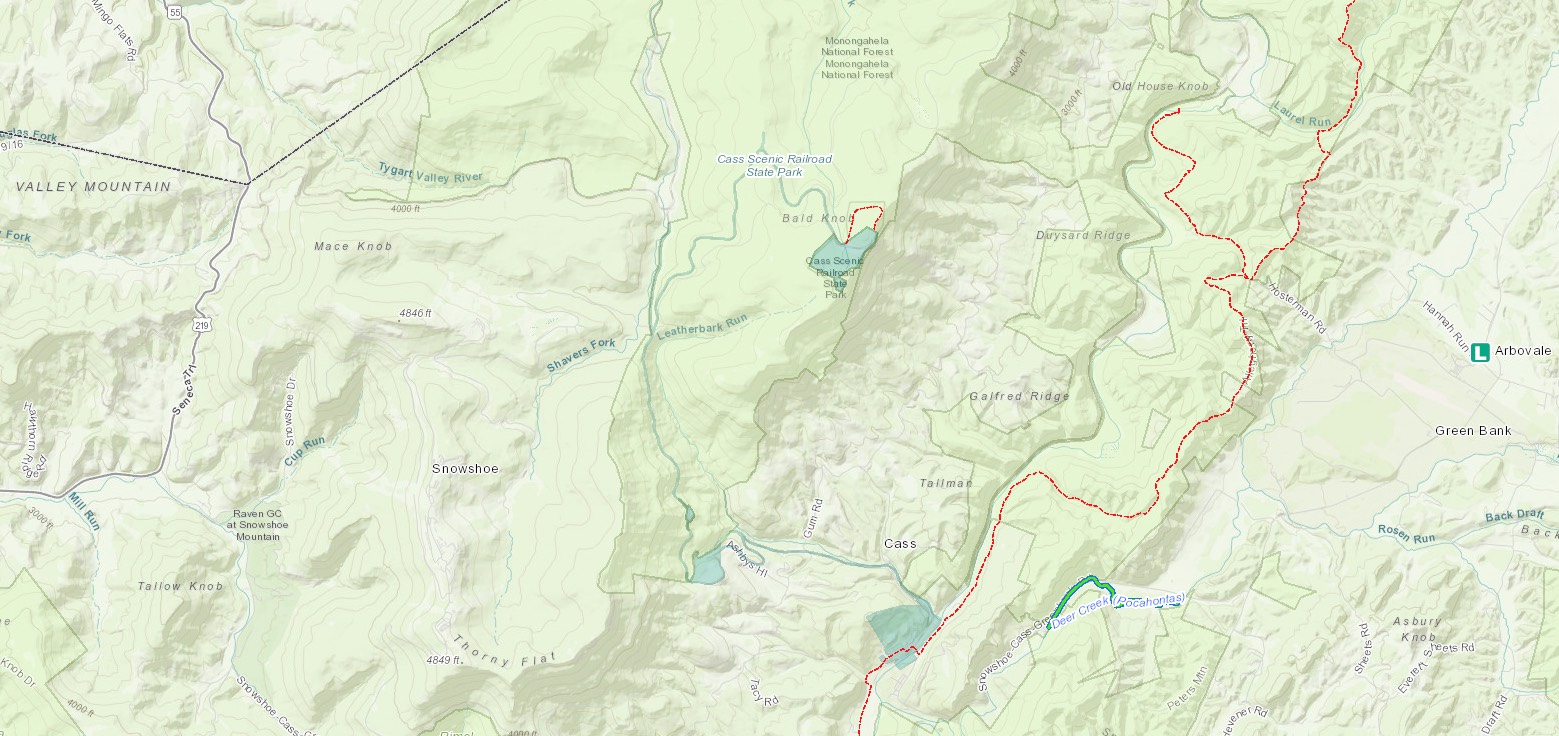
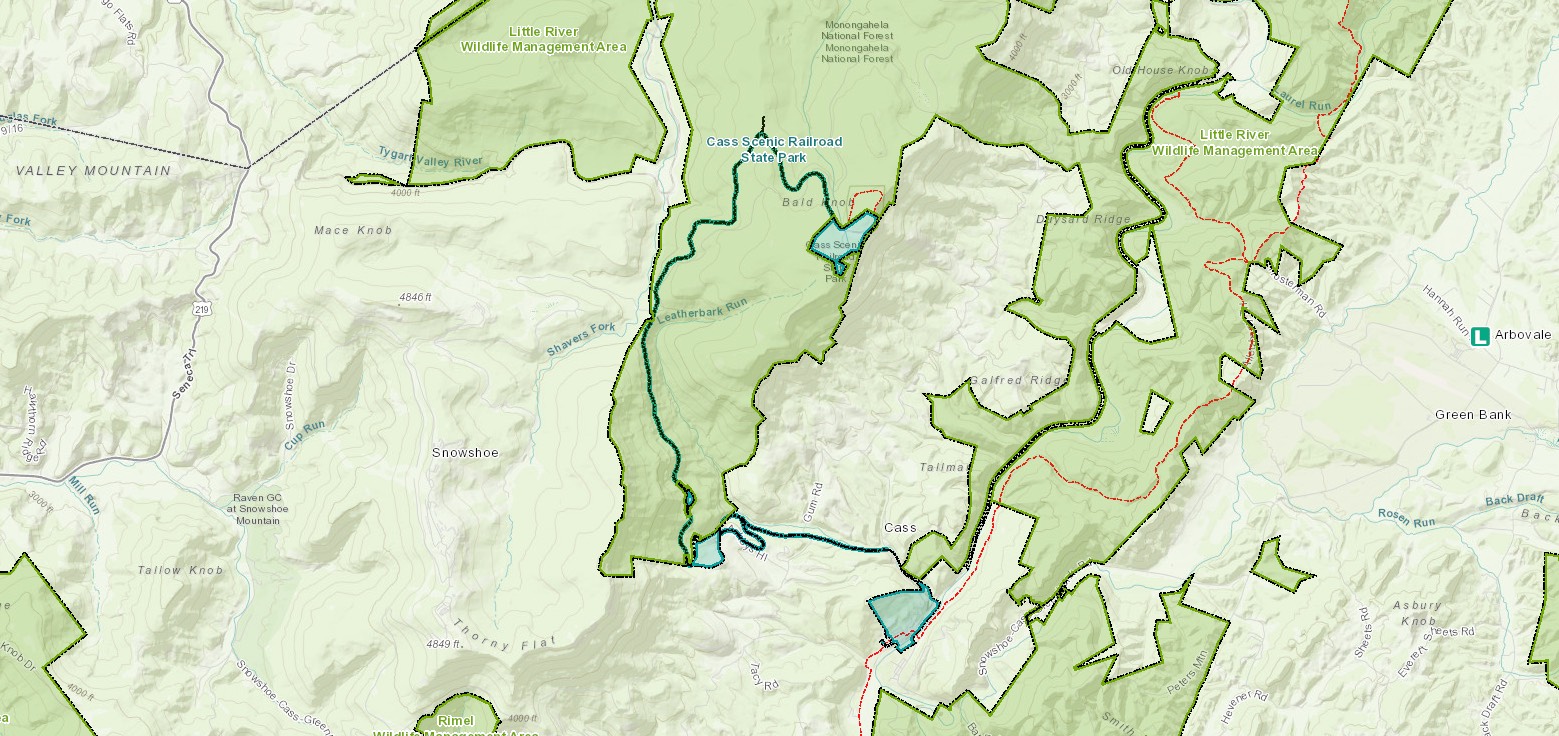
While Cass Scenic Railroad State Park does not have any trails of its own, the northern terminus of the Greenbrier River Trail is at Cass. This 78-mile-long rail trail, operated by the West Virginia state park system, is popular with hikers, bikers and horseback riders.
Cass Scenic Railroad State Park sits in the middle of the Allegheny Trail (ALT). The Allegheny Trail is a 311-mile north-south trail with its northern terminus on the Mason-Dixon Line at the Pennsylvania-West Virginia border near Bruceton Mills. It wends it way south until it meets the Appalachian Trail on Peters Mountain at the Virginia-West Virginia border. Founded in 1972 by the West Virginia Scenic Trail Association, this trail is also known as the ALT. To learn more about the ALT, click here.
Pickin’ on the Porch
This popular event is for local musicians and music lovers alike. Pickin’ on the Porch starts around 5 p.m. every Saturday from May to October. Bring your guitar, banjo or fiddle and pick along or listen and sing along.
Take a trip on horseback
Take a trip on horseback with Autumn Breeze stables from their facility at Silvercreek to the Bald Knob Cabin and Fire Tower. The trip is approximately 3.5 hours to the cabin where you will be truly surrounded by wilderness and the opportunity to unplug, relax and enjoy. Meals are provided by the guide while you are there on this overnight trek. This is an experience that found only at Cass and nowhere else on the East Coast.
Call the Cass Scenic Railroad State Park directly for reservation and details.
Nearby Attractions
Beartown State Park
Just an hour south of Cass, Beartown State Park’s natural area expands 107 acres across the eastern summit of Droop Mountain.
Cranberry Glades Botanical Area
Who else can say they toured the largest area of bogs in West Virginia? The U.S. Forest Service conducts spectacular guided tours during the summer months here.
Droop Mountain Battlefield State Park
Experience history like never before at Droop Mountain Battlefield State Park. This is the site of the famous Civil War battle. Visit in October and you can catch a re-enactment!
Greenbrier River Trail
Enjoy nature like never before! Experience a 78-mile- long rail trail operated by the West Virginia State Park system that is a hit with hikers, bikers and horseback riders.
Highland Scenic Highway
Don’t stick to the same old roads! Take a detour on the National Scenic Byway, a beautiful 43-mile corridor through the Monongahela National Forest.
Falls of Hill Creek
Cool off a bit or simply take in the natural beauty! Just off of the Highland Scenic Highway, this popular 114-acre area contains three waterfalls.
Kumbrabow State Forest
At 3,930 feet above sea level, this is the state’s highest forest. It features fully equipped pioneer cabins, campsites, bathhouse, picnic areas and an abundance of wildlife.
Green Bank Observatory
Reach for the stars at Green Bank Observatory! Public tours are available at this advance research facility. Check out the gift shop for cool souvenirs or grab a bite to eat at Starlight Cafe.
Pearl Buck Birthplace
The Pearl S. Buck Birthplace Museum showcases the home in which the Nobel and Pulitzer Prize-winning author was born in 1892.
Seneca State Forest
Enjoy West Virginia’s oldest state forests! With pioneer guest cabins, lake fishing, camping and hiking it has fun waiting for every guest.
Snowshoe Mountain Resort
What could be better than skiing in the winter? Come ski at Snowshoe, a four-season resort that’s especially popular during the winter season.
Spruce Knob State’s Highest Point and Observation Tower Walk
Hike Whispering Spruce Trail and climb the tower for beautiful vistas and observe how vegetation has adapted to this high-elevation environment.
Watoga State Park
Watoga State Park offers 10,100 acres of endless beauty just for you. The park is filled with recreational activities including hiking, swimming fishing and boating and vacation cabins that are open year-round.
Elk Springs Resort
Unwind at this luxurious fishing getaway, where trout are plentiful. Get help from professional guides or load up at the fly shop— the largest in West Virginia.